Wednesday, 16 August 2017

What are the best app development companies in India?

Application Development includes research, new development, modifications, reuse, re- engineering, maintenance or any other activity that results in the finished application. As market changes, the way we do our business and spending on IT activities of our business also changes. This dynamic change not only creates pressure but also open the doors to new opportunities. Therefore today, IT giants must stay on the cutting edge of providing complex solutions with less time-to-market in an affordable manner to its customers.


iFour Technolab Pvt Ltd helps organizations to effectively manage their applications through customized solutions. We provide value to our clients by leveraging our techniques and practices to satisfy our customers’ requirements.
Some of our value adding features in our services is:
  • Domain Knowledge: Our deep industry knowledge and technical expertise to deliver effective results. We provide services to reduce costs and increase productivity.
  • Customized Application: Customized solutions to support individual business needs. We develop applications that are scalable, secure and easily maintainable.
  • Application Maintenance Support: We ensure that our applications are working effectively and efficiently supporting all business requirements. We offer continuous maintenance and support services to ensure long term value adding to our customers.
iFour Technolab Pvt. Ltd. provides application development services in India for various platforms like web, desktop and mobile that includes iOS, Android and Windows mobile. We understand the importance of technology and platform selection and conduct a special walkthrough with customer to discuss and select the right technology platform that suits your requirement and IT infrastructure. We use cutting edge technology for application development and ensure that it is in sync with your IT infrastructure.  Throughout the project lifecycle our focus is on the organization and providing measurable results.

Wednesday, 9 August 2017

What are the best software companies in India?

As IT industry is emerging at pick level these days, it becomes very essential thing to choose the right company for our requirements. Best Software Company is the one which understands the customer requirements and provides best software solutions in limited budget.  I have been a part of iFour Technolab Pvt. Ltd. custom software development company since a long, I assure that this is a company which has the perfect portfolio in each specialization.


custom software development company india


Company is providing all kinds of solutions in each platform. Having numerous skilled workforce company has deepen the roots in IT industry.  The company not only provides best software solution but also maintains a great relationship with the customer at longer period.

Here is a list of services provided by iFour Technolab Pvt. Ltd.
Company uses all kinds of technologies like Microsoft .Net, android and iPhone, PHP and open source, windows media development, SharePoint development, etc. In addition to that company is at the prime location in Ahmedabad which gives huge exposure in terms of market networking.

Wednesday, 19 April 2017

Risk Mitigation as a process


Software companies in India
Risk mitigation, another process of risk management, involves prioritizing, evaluating, and implementing the suitable risk-reducing controls suggested from the risk assessment process. Since the elimination of all risk is typically impractical or close to impossible, it is the obligation of senior management and functional and business managers of software companies in India to practice the least-cost approach and implement the most appropriate controls to shrink mission risk to an acceptable level, with minimal adverse impact on the organization’s resources and mission.

RISK MITIGATION OPTIONS
Risk mitigation is an organized methodology used by senior management to shrink mission risk. Risk mitigation can be accomplished via any of the following risk mitigation options:

Risk Assumption
To accept the probable risk and continue operating the IT system or to implement controls to lower the risk to an satisfactory level

Risk Avoidance
To avoid the risk by eradicating the risk cause and/or consequence (e.g., forgo specific functions of the system or shut down the system when risks are acknowledged)

Risk Limitation
To limit the risk by implementing controls that minimize the opposing impact of a threat’s working out a vulnerability (e.g., use of supporting, preventive, detective controls)

Risk Planning
To manage risk by developing a risk mitigation plan that ranks, implements, and maintains controls

Research and Acknowledgment
To lower the risk of loss by recognizing the vulnerability or defect and researching controls to correct the vulnerability

Risk Transference
To handover the risk by using other options to reimburse for the loss, such as purchasing insurance.


The goals and mission of an organization should be reflected in selecting any of these risk mitigation options. It may not be practical to tackle all identified risks, so importance should be given to the threat and vulnerability pairs that have the potential to source significant mission impact or harm. Also, in defending an organization’s mission and its IT systems, because of each organization’s distinctive environment and objectives, the alternative used to mitigate the risk and the methods used to implement controls may differ. The “best of breed” tactic is to use suitable technologies from among the several vendor security products, along with the suitable risk mitigation option and nontechnical, administrative measures.

Following are rules of thumb, which provide guidance on actions to mitigate risks from deliberate human threats:

When vulnerability (or defect, weakness) exists
 ➞ Implement assurance techniques to diminish the likelihood of a vulnerability’s being exercised.

When a vulnerability can be exercised
➞ put on layered protections, architectural designs, and administrative controls to reduce the risk of or prevent this incidence.

When the attacker’s cost is a smaller amount than the possible gain
➞ apply protections to decrease an attacker’s incentive by increasing the attacker’s cost (e.g., use of system controls such as restraining what a system user can access and do can considerably reduce an attacker’s gain).

When loss is too excessive
➞ apply design principles, architectural designs, and technical and nontechnical shields to limit the range of the attack, thereby reducing the likely for loss.

The strategy sketched above, with the exclusion of the third list item (“When the attacker’s cost is a smaller amount than the possible gain”), also applies to the mitigation of risks rising from environmental or unintended human threats (e.g., system or user errors). Because there is no “attacker,” no motivation or gain is involved. Software companies in India have started believing in risk mitigation process and it has proved to be a drastic risk reducing and controlling factor for them.

Friday, 10 March 2017

ITIL Service Design

software development company

The scope of Service Design covers the design of new IT services, as well as modification, changes and improvements made to the existing ones.

The activities included in Service design are :
  • To design the IT services to meet Business Objectives of a software development company.
  • To design Secure & flexible IT Infrastructure.
  • To analyze, identify and remove the risks associated with the IT services before they go live.
  • To create & maintain the IT plans, processes, policies and frameworks.
  • To design methods & metrics for the measurement of the effectiveness of processes.
  • Design Effective & efficient processes for design, transition & operation phases

The Service Design includes different phases, namely :
  1. Design Coordination
  2. Service Catalogue Management
  3. Service Level Management
  4. Availability Management
  5. Capacity Management
  6. Supplier Management
  7. Information Security Management
  8. Service Continuity Management
  9. Risk Management
  10. Compliance Management
  11. Architecture Management
DESIGN COORDINATION
Design Coordination handles all processes in the Design stage and acts as the center point of all the communication.
It governs all designing activities and make sure that the consistent design of IT services is aligned with the service strategy.

Five Sub processes of the Design Coordination includes :
  • Design Coordination Support
  • Service Design Planning
  • Service Design Coordination and Monitoring
  • Technical and Organizational Service Design
  • Service Design Review and RFC Submission
SERVICE CATALOGUE MANAGEMENT

Service Catalogue Management includes the IT Services which are ready to be used and implemented.

The objective of the Service Catalogue Management includes :
  • Creating and maintaining the Service Catalogue.
  • Keeping the Service Catalogue updated with the latest trends and information.
  • There has to be Continual Improvement in Management of Service Catalogue.
Service Catalogue :

The service catalogue is defined as the single source of information for all the offerings of IT services. It includes Operational & in Transition Services. Service catalogue is considered as a part of Service Portfolio. Service Catalogue emphasizes on what kind of IT service software development company would would like to offer to its customers based on the needs of the customers.

The different types of Service Catalogue are given as :
  • Business Service Catalogue
  • Technical Service Catalogue

AVAILABILITY MANAGEMENT


The Availability Management ensures that the IT services are working as agreed upon.

The objective of the Availability Management includes :
  • To ensure agreed Availability Level is continuously met or not and check whether it has exceeded the expected level or not.
  • To ensure that a defined level of IT services are accessible to customer in a cost effective way.
  • The availability management ensures Availability
  • The availability management ensures Reliability
  • The availability management ensures Maintainability
  • The availability management ensures Serviceability
  • The availability management ensures Fault Tolerance
Three sub-processes of Availability Management includes :
  • Design Services for Availability Process
  • Availability Testing Process
  • Availability Monitoring and Reporting.
SERVICE LEVEL MANAGEMENT

The Service Level Management covers the negotiation & service level agreement with the clients on the various IT service provided.

The objective of the Service Level Management includes :
  • It focuses on the negotiation, agreement and documentation of the agreed levels of the IT Services.
  • Maintaining the balance between expectation of the customers and the capabilities of an IT organization.
  • Emphasizes on continual improvement and maintaining of the agreed IT service levels
  • It looks onto managing the performance as per the agreed service level norms.
  • Maintain the customer relationship is given importance.

Four Service Level Management sub-processes includes :
  • Maintenance of the SLM Framework Objective
  • Identification of Service Requirements Objective
  • Agreements Sign-Off and Service Activation
Service Level Monitoring and Reporting Process

CAPACITY MANAGEMENT


The Capacity Management ensures IT services are sized in very cost effective manner and at the optimum level.

Mapping and ensuring that the capacity of IT services with the IT infrastructure is able to deliver the agreed service level targets in a cost effective and timely manner.
It ensures that the IT infrastructure is utilized to its optimum level.
Capacity plan should be regularly produced and updated.

Four Sub processes of the Capacity management includes :
  • Business Capacity Management
  • Service Capacity Management
  • Component Capacity Management
  • Capacity Management Reporting
SUPPLIER MANAGEMENT

The role of the Supplier Management in an IT organization is to manage Supplier Relationship & Performance and maintain it for the advantage of the organization on the ease of resource availability.

The objectives of the Supplier Management includes :
  • To enhance and maintain the supplier relationship & performance
  • To Ensure the relevant and correct contracts with the supplier of the IT services
  • To manage and maintain the contracts throughout the supplier management lifecycle
  • To create and maintain the database of Supplier Policy and Contracts
Six Sub Processes of Supplier management includes :
  • Providing the Supplier Management Framework
  • Evaluation of new Suppliers and Contracts
  • Establishing new Suppliers and Contracts
  • Processing of Standard Orders Process
  • Supplier and Contract Review Process
  • Renewal or Termination Process
INFORMATION SECURITY MANAGEMENT

Information Security Management is the way to protect the data and information of the IT organization against the vulnerabilities of the natural or environmental factors. 

The objectives of the Information Security Management includes :
  • To prevent  against the unauthorized access
  • To provide various effective security measures at different levels : Strategic, planned & Operational organizational Levels
  • To match and comply with the Information Security Requirements as per Service Level Agreement
Four Sub Processes of the Information Security Management includes :
  • Design of Security Controls
  • Security Testing
  • Management of Security Incidents
  • Security Review
SERVICE CONTINUITY MANAGEMENT

The Service Continuity Management process focuses on the continuation and the recovery  of the IT services even after the disaster and ensuring that they work in the same fashion as before as per the  agreed & applicable SLA

The objectives of the service continuity management includes :
  • To create & manage IT service continuity & recovery plans
  • To reduce potential disaster occurrence
  • Balance SLAs & Cost factors while planning for service continuity
Four sub processes of the service continuity management includes :
  • ITSCM Support Objective
  • Design Services for Continuity
  • ITSCM Training and Testing
  • ITSCM Review.
Conclusion: The service design helps to an IT organization to design new services and increasing the relationship with the IT service providers and the supplier along with maintaining the relationship with the customer thereby increasing the value of the IT organization. It helps to maintain the existing IT Services as well as implementing new services.

References :

http://wiki.en.it-processmaps.com/index.php/ITIL_Service_Design

Wednesday, 8 February 2017

Types of Network Security

Software development companiesNetwork scanning is a scanning used to define vulnerabilities in a network. A scan can be used by security experts to shield the security of a network from an external attack. Hackers may use a scan to find vulnerabilities. Different types of scanning are as under,


Three–Way Handshake

TCP is connection-oriented, which indicates connection establishment is principal prior to data transmission between applications. This connection is possible using the process of the three-way handshake. The three-way handshake is applied for establishing the connection between protocols.

The three-way handshake procedure goes as follows:
  • To launch a TCP link, the source sends a SYN packet to the destination (10.0.0.3:21).
  • The destination, on getting the SYN packet, i.e., sent by the source, responds by referring a SYN/ACK packet back to the source.
  • This ACK packet checks the arrival of the first SYN packet to the source.
  • The source sends an ACK packet for the ACK/SYN packet sent by the receiver.
  • This triggers an "OPEN" connection agreeing communication between the source and the destination, until any of them send a "FIN" packet or a "RST" packet to close the connection.
The TCP protocol keeps stateful connections for all connection-oriented protocols across
the Internet, and works the same as a normal telephone communication, in which one picks up a telephone receiver, hears a dial tone, and dials a number that generates ringing at the receiver end until a person picks up the receiver and tells, "Hello."

Stealth Scan(Half-Open Scan)

Stealth scan sends a single frame to a TCP port without any TCP handshaking or extra packet transfers. This is a scan type that leads a single frame with the expectation of a single response. The half-open scan partly opens a connection, but stops midway. This is also known as a SYN scan because it only directs the SYN packet. This stops the service from ever being reported of the incoming connection. The three-way handshake approach is also implemented by the stealth scan. The variation is that in the last stage, remote ports are recognized by examining the packets entering the interface and dismissing the connection before a new initialization was activated.

The process preludes the following:
  • To start initialization, the client forward a single "SYN" packet to the destination server on the matching port.
  • The server initiates the stealth scanning process, depending on the response sent.
  • If the server forwards a "SYN/ACK" response packet, then the port is in "OPEN" state.
  • If the response is advanced with an "RST" packet, then the port is in a "CLOSED" state.

NULL Scan

NULL scans direct TCP packets with all flags turned off. It is expected that closed ports will return a TCP RST. Packets received by open ports are rejected as invalid. It sets all flags of TCP headers, such as SYN, ACK, FIN, RST, URG and PSH, to NULL or unassigned. When any packets reach at the server, BSD networking code notifies the kernel to drop the incoming packet if a port is open, or sends an RST flag if a port is closed. This scan uses flags in the opposite fashion as the Xmas scan, but gives the similar output as FIN and Xmas tree scans. Many network codes of major operating systems can behave inversely in terms of responding to the packet, ex, Microsoft versus UNIX. This method does not helpful for Microsoft operating systems. Command line for null scanning with NMAP is " -sN"
Advantage:
It evades IDS and TCP three-way handshake.
Disadvantage:
It is helpful only for UNIX.

Network scanning scans networks for vulnerabilities in the security of that network. If there is a vulnerability with the safety of the network, it will give a report back to a hacker who may use this information to exploit that network bug to gain entry to the network or for other malicious actions.

Tuesday, 10 January 2017

Introduction to Project Management

Software development companies

What Is a Project?

A project is defined as a temporary attempt undertaken to make a unique product, service. The project achieves when its objectives are met or when the project has been terminated. The time taken to complete a particular project depends upon its size. It can be a large or small project. Software development companies define the project similarly except that the objectives are different and business oriented.

Project Attributes

The attributes of project includes a unique purpose for which the task is undertaken. To carry out a project different resources are required from different domain or areas.
Projects are temporary and they should have a sponsor or a primary customer. There is always an uncertainty attached with a project.

The project sponsor is the person who is responsible for providing the direction and funding for the project.

Project and Program Managers

Project managers work with the entire Project Team, Project Sponsors, and all the other people involved in a project to meet project goals and objectives whereas a Program is defined as group of related projects managed in a coordinated way to obtain benefits and control not available from managing them individually

What is Project Management?

Project management is the use of knowledge, skills, various tools and techniques to achieve goals and meet the requirements of the project. The triple constraints of project management are scope, time and cost.

The project stakeholders are part of project. They are the people involved and affected by the various activities carried out in the project. Stakeholders can be the project sponsor, project manager, project team, clients/customers, users and suppliers.

The key competencies required by project managers are described by the Knowledge areas.

The four core knowledge areas are scope, time, cost, and quality. They lead to some specific project objectives. The other four facilitating knowledge areas through which the project objectives are achieved are given as HR, communication, risk, and Procurement management.

To assist project manager, various Project management tools and techniques are used. Some specific tools and techniques include Project charter, Scope and Work Breakdown Structure, the Gantt charts, Network diagrams, Critical Path and chain scheduling. The knowledge are taking into cost are given as cost estimates and Earned Value Management (EVM).

As a part of Project management, Super tools have high use and potential for improving project success and achieve project goals such as Task scheduling software, Scope statements, various requirement analysis, and the report for the lessons learnt.

Tools, as suggested by some software development companies in India, which are extensively used and found to improve the importance of project includes the project progress reports, scheduled Kick-off meetings and Change requests.

The following points should be taken care for a successful project. They are given as:
  • Support from Executives
  • There should be continuous User involvement
  • Experienced project manager
  • Clearly defined Business objectives
  • Minimized and focused scope
  • Standard Software infrastructure
  • Formal Methodologies
  • Reliable cost and resource estimates
  • Other criteria such as milestones, proper project planning, competent and reliable staff.

Most Important Skills and Competencies for Project Managers for a successful projects :
  • People skills
  • Leadership skill to guide and lead all the people working in the project.
  • Listening skills to take better decisions to achieve project goals.
  • Should be strong at building trust
  • Verbal communication
  • Managing and Building project teams
  • Project manager should be an ideal decision taker to Conflict resolution, conflict management.
  • They should have a Critical thinking to carry out effective and unique project.
  • Project manager should have problem solving skills to manage the problems arising during the project development.

Monday, 5 December 2016

Handling Security Issues in SDLC

software development companies

ASP.NET software companies in India must take special care while developing internal web applications that are accessed from outside with the help of world wide web. Moreover the increase in personally-owned mobile devices (e.g., watch gear, smartphones, tablets, and laptops) as well as the vast variety of vulnerable mobile apps results into a higher risk of revealing highly confidential and business-related information in the workplace. This is possible when such information is stored on personally-owned devices. Cyber-attacks often exploit such vulnerabilities inherent in applications and operating systems. Hence The software code must be developed following a secure coding guidelines and frequent updates and patches to software are necessary.

Security is unquestionably mandatory and no-one can overlook that. It may take longer and including security into SDLC may result into a more complicated practice.  Nevertheless, the alternatives are not that satisfactory as there are always hackers only too eager to disrupt into systems.

The consequences of not including security within the SDLC process can be catastrophic and could cause distressing concerns for companies' status and earnings. By safeguarding SDLC, unnecessary & un-planned costs can be evaded and security matters can be tackled as there is no need to wait for threats to emerge and then having to spend money in fitting current or probable matters that could have been dodged.

Software companies in India  use secure-SDLC that focuses on enforcing security into the Software Development Life Cycle. Every phase of SDLC will emphasize the enforcement of security – over and above the present set of events. Incorporating S-SDLC into an organization’s structure has many benefits that guarantees a secure product.

The focus of asp .net software companies in India, with respect to security domain, is on phases of SDLC such as design, implementation, delivery, operation, maintenance, and retirement. Information security and privacy experts must be involved in all phases of SDLC so that the overall effectiveness of security controls with respect to privacy concerns are taken care of.

The subsequent list recognizes key security guidelines at each stage in the development life cycle for asp .net software companies in India:

  • System feasibility: Pinpoint security requirements, including governing requirements, in-house policies and standards that must be looked at.
  • Software plans and requirements: Recognize the vulnerabilities, threats, and risks to software. Outline the desired level of protection. Conduct a cost-benefit analysis.
  • Product design: Propose for the security criteria in product design (e.g., access controls or encryption).
  • Detailed design: Determine business requirements and legal obligations within the design of security controls in a product or system.
  • Coding: Develop the security-related software code, comments and citations.
  • Integration product: Investigate security measures and make alterations.
  • Implementation: Implement any additional safety dealings prior to go-live.
  • Operations and maintenance: Observe the software and system for variations in security controls. Assess current controls against newly-discovered threats and vulnerabilities. Implement proper updates and patches, when essential. Certify the complete effectiveness of application and system security.
  • Product retirement: Safeguard information that was used and warehoused (i.e., archived), relocated to another database or system, or sterilized (i.e., erased) from the system.

Thus asp .net software companies in India can identify, reduce, mitigate and eliminate various security threats and adverse impacts that could be present in each stage of SDLC. It ultimately results into reduction in overall cost, efforts and time of delivering the final product or service in IT industry.
.

Thursday, 3 November 2016

Legal steps you must take before outsourcing content creation

custom software development companies
With the growth of the Internet and the need to create steady content, outsourcing has become incredibly common. In fact, [ CITATION Pat16 \l 1033 ] cites research that shows 79 percent of software development companies are embracing content marketing, while [ CITATION Sta14 \l 1033 ] reported that the global market size of outsourced services in 2014 was $104.6 billion dollars.

Being at the top in your market with content is crucial, as the value of great content drives leads and results in more sales. But before you jump to the abysmal of outsourcing content creation, there are a few things you’ll want to ponder, so that you can not only approach it the correct way but also protect you and your business from any negative effects down the road.

Recognize your content needs

In order to recruit great content creators you have to first delineate what type of content you need.
For instance, you could include:
  • Weekly blog posts
  • Social media updates
  • Guest blogging
  • Email marketing
  • Pay-per-click ad copywriting

Finding the specific types of content needed may not appear to be a legal step. However, at the kickoff, these are extremely essential things to ponder, all of which will enable you to sketch both your job advertisement and various aspects of your binding agreement.

Assign copyright

The act of simply compensating someone does not automatically turn over copyright of that content to the end user. Unless you explicitly list the terms of use in your agreement, the content creator maintains ownership of that content. In this case, you only have an implicit license, therefore, you’ll need definite permission to re-purpose any of that content for other stuffs, such as turning a blog post into an e-book or social-media posts.

It’s also essential that you consider safeguarding against the indemnification for images or content that may be the property of others. At the end of the day, you will be accountable if the content published on your site or in your materials is found to break the copyright law.
For text-based copy, using a service such as Copyscape is standard practice. But with image attribution, this is particularly tough, since there’s no good way to test the copyright short of either buying the rights or waiting for an angry copyright act warning from the owner who feels intruded.
Be clever and understand copyright upfront so you can evade any negative consequences.

Explicitly sketch outsourcing requirements.

Be as specific as possible when delineating requirements so that freelancers know your expectations, including benchmarking and measuring triumph or disaster. You may also want to include a SLA that clearly outlines performance details, measurements and standards. 

Cogitate on legal liabilities in your content.

You may need to take further provisions if the content you’ll be outsourcing is subjected to any regulatory requirements. For example, if you’re publishing medical content or financial advice, you may need to include relevant disclaimers or ensure materials produced meet certain standards to protect yourself lawfully.

If the content you publish on your website is such that you could be held legally liable for, be sure your outsourced creators are able to meet any essential requirements.

Preparing in advance for closure.

Ideally, you’ll find in a freelancer a long-term association for your content creation needs. But since turnover is unavoidable, it’s far better to protect yourself from start. Your termination clause is immensely important, as it sets forth the conditions under which the customer may exit the outsourcing association.

The termination clause needs to state the common reasons that give rights to you and your software development company to exit the clause along with the rights of the contractor. It’s also advisable to include both party’s respective privileges upon termination with regards to ongoing privacy and protection here as well.

Put everything in the contract.

Now that you’ve enclosed all your legal bases, document them in a formal written contract that both you and your freelancers will agree on. In most cases, it’s advisable to consult with an actual lawyer to do this. However, you can get started by finding similar contract agreements to work from. 

Take out an insurance policy.

Last, but not the least -- and let’s keep it short and simple -- it’s definitely worth investing in an insurance policy when it comes to defending your legal rights as a content creator and purchaser. At the end of the day, you need to be prepared for any legal complications that could occur from the content you publish -- or, at the very least, be fully aware of who’s liable for anything that may happen.

Conclusion
Though the Internet has distorted the rules and lines of outsourcing somewhat, it’s advisable to stick to guidelines and follow the rules to protect yourself. If you have any doubts, consult a lawyer.

Bibliography
Robles, P. (2016). Patricio Robles. Patricio Robles. Patricio Robles.
Statistica. (2014). Statistica. Statistica.

Tuesday, 4 October 2016

Fitting enterprise systems into systems

Software development company in india

Enterprise systems, developed by software companies in India, are used by large companies and small- and medium-sized enterprises (SMEs) to reorganize and streamline their internal and external operations.

Enterprise systems are used to enable the seamless integration and exchange of information between the several departments within an organization. In order to accomplish this, strictly defined control mechanisms must be in place in the system, which protect the company's data and safeguard the company against unauthorized and unintentional uses of the system. This is perfect for total control; however, is only attainable to a certain degree. The outline of controls in the enterprise system may have unintended organizational consequences, due to organizational necessities. The introduction of an enterprise system increases power differentials, which help to increase control in the organization. This results in amplified rigidity, and a probable decrease in organizational flexibility and resilience. On the other hand, enterprise systems can also cause drift, resulting from the unforeseen consequences of these power differential, as well as from the role of insights of people in resolving a problem within the enterprise system. This decrease in control may serve in some situations as an enabler to organizational flexibility.

Software companies in India recommend workforces to have decreased or increased authority, as an outcome of assignments of dissimilar authorization levels to carry out jobs in the system. Moreover, people with better knowledge of the system seem to attain authority as more people bank on their proficiency in order to carry out their tasks. Monitoring is another source of influence, where the person carrying out the monitoring is realized to control what the subordinate is performing in the system. Monitoring in this case depends on the accurate assignment of authorization levels to the correct individuals.Thus creation of authorization level shapes in the system, together with the monitoring abilities of the system and the making of proficiency by several actors, leading to the creation of power differentials. These power differentials then delivered to escalate the control in the company.

An enterprise system can be segregated, based on local contexts of communication, and reform them across time space. This is attained with the widespread nature of the enterprise system, which is configured in a central site. The segregation process then outcomes in increased control, produced by the significance of the configuration of the enterprise system, and the concentration of power in the hands of nominated individuals. As control increases, stiff mechanisms are put,by software companies in India, into place to create the organization more inelastic and robust. As such, the processes and procedures in the company are frozen, and firm rules apply regarding access to and manipulation of company information. Depending on the degree of this stiffness in rules (imposed by the enterprise system), the company may convertinto too unbending to respond efficiently to circumstances of change and pressure, and consequently becomingless resilient. Manipulation or soothing of those rules may, still, lead to more elasticity (with the price of fractional loss of control), and hence resilience can trulyrise.

On the other hand, an enterprise system can also be understood to integrate. This is accomplished with the scattered nature of enterprise systems, which can be installedwith the help of software companies in India, in many locations across time space. As anoutcome of the integration, there may be drift because of the influence of unintentional consequences of the system and the role of ethics of people in cracking a problem. This decline in control may serve to increase the resilience of the company, because the workforces operate the system for their individual use and are, therefore, able to react more to change when this happens. On the other hand, when the workforces fully follow the processes and procedures uttered by the system, then there is less or no drift, and the control structures enforced by the system are rebuilt. In this case resilience may actually decrease.

Thus fitting enterprise system into enterprise systems can produce higher rigidity into an organization at the same time it can also increase flexibility depending upon the organization necessities.Software companies in India can configure enterprise systems and its authorization levels as it is asked for.

Wednesday, 21 September 2016

Domain Based Security

software development companies

Domain Based Security is being used more and more for the identification, analysis and documentation of security issues in enterprise communication & information systems projects particularly in the military domain and for the Asp.net software companies in india. The procedure incorporates numerous security related activities in the early stages of the systems lifecycle to support in the specification of high-level, technology independent security functionality solutions.

The article focuses on: 

  • Ranking risks according to an correct value system 
  • Modeling business connections in an extensible manner

The DBSy Model(Domain based security)

The DBSy approach uses simple models to characterize the requirements for security in an organization using two different but related viewpoints: the InfoSec Business Model signifies the security aspects of the business, while the InfoSec Infrastructure Model signifies the logical provision of strong boundaries that enforce separation. When combined, they create an InfoSec Architecture Model. This model forms the basis for showing a systematic and rigorous risk assessment.

The InfoSec business model defines security domains for Asp.net software company india and the networks between them. The model specifies the limits of what info can be processed and replaced between security domains to form the set of security requirements for the business. In particular, connections that are not explicitly demonstrated are not permitted and are required not to occur. A security domain is characterized by a set of information assets, which may be valued to the organization, as well as the people that work with the information and the applications and services that perform on their behalf. Connections between domains are categorized by the nature of the interaction that is required (such as interpersonal messages, or shared access to a database) and the sensitivity and integrity requirements of the information exchange. The model can also signify the kinds of physical environment from which a domain can be accessed.

The InfoSec infrastructure model defines computing infrastructure that are essential to be logically separatefor Asp.net software companies india , so that statistics cannot be replaced between them except at recognizable and manageable points of connection, referred to as causeways. An island is characterized by the strength of separation between it and any other islands and by the people who achieve its computing infrastructure.

An InfoSec architecture model combines the business and infrastructure views, by showing which security domains are reinforced by which islands of infrastructure. Where there are links between securities domains that are hosted on different islands, the connections must be reinforced by an appropriate causeway.

Risk Assessment Method

The DBSy method uses a rational risk framework for linking the risks to which information assets are exposed.Assets are collected together as a focus of interest, and the risk assessment process for C#.net software companies in india is applied to each focus of interest in turn.
The key factors defining the risk to a particular focus of interest are:

  • Business Impacts confidentiality, integrity or availability of the focus of interest.
  • Sets of people who might demand to impose damage (threat sources) and their motivation for doing so.
  • People with different opportunities to impose damage (threat actors) and their capability to do damage, who may also be threat sources or could be influenced by others.
  • The means by which each threat performer might cause damage (causes of compromise).

Conclusion

Domain Based Security", abbreviated to "DBSy", is a model-based approach to help examine information security risks in a business context and provide a clear and direct mapping between the risks and the security controls desired to manage them.

References

Monday, 12 September 2016

Access Control Domain

custom application development companies

Access control Domain encompasses :

  • Discretionary, Mandatory, and Non-Discretionary models 
  • Identification methods, Authentication methods
  • Accountability, monitoring, and auditing practices 
  • Intrusion detection systems/Intrusion Prevention Systems 
  • Likely threats to access control practices and technologies 
  • A Framework that dictates how Subjects access Objects

The types of Access Control are :

  • DAC
  • MAC
  • RBAC 

Discretionary Access Control – DAC

A system that uses discretionary access control (DAC) allows the holder of the resource to specify which subjects can access specific resources. This model is called discretionary as the control of access is based on the discretion of the owner.

For example, a manager for a definite department in the Custom software development company might be made the holder of the files and resources within his/her domain.

The most common application of DAC is through ACLs, which are spoken and fixed by the owners and enforced by the operating system.


  • DAC permits the privileges i.e. granting and revoking of access control to be left to the discretion of the individual users
  • It is highly flexible 
  • Not appropriate for –
    -- High assurance systems, e.g. a military system 
    -- Many complex commercial security requirements 
  • It is Identity-based 


Mandatory Access Control –MAC

In a mandatory access control (MAC) model, users and data owners do not have asmuch liberty to determine who can access files. The operating system makes the final conclusion and can outweigh the users’ wishes.

This model is much more structured and strict and is based on a security label system. Users are provided a security clearance (secret, top secret, confidential, and undefined), and data is classified in the same way. The clearance and grouped data is stored in the security labels, which are bound to the specific subjects and objects.

A given IT infrastructure in software development company can implement MAC systems in many places and at different levels. OS uses MAC to guard files and directories.
Database management systems apply MAC to regulate access to tables and views. Best commercially available application systems apply MAC, often independent of the operating systems and/or DBMSs on which they are installed.

OS constrains the ability of a subject or initiator to access or perform some operation on the object. Subject is usually a process thread and objects are constructs like files, tcp/udp ports, shared memory segments etc.

Whenever Subject tries to access Object, an authorization rule enforced by the operating system kernel inspects the security attributes and chooses whether access can take place.
Information classification is necessary, label-based

  • Well suited to the requirements of government and industry organizations that process classified and sensitive information 
  • Such environments usually require the ability to control actions of individuals beyond just an individual's capability to access information permitting to how that information is labeled based on its sensitivity 


RBAC 

  • In RBAC model, a role is well-defined in terms of the tasks and operations that the role will need to carry out, whereas a DAC sketches which subjects can access what objects. 
  • RBAC uses a centrally administrated set of controls to determine how subjects and objects act together. This type of model allows access to resources to be based on the role the user holds within the company example Software Development Company. 
  • A role can be thought of as a set of transactions that a user or set of users can perform within the context of an organization i.e. a collection of permissions.
  • A transaction can be thought of as a transformation procedure plus a set of associated data items 
  • Roles are group oriented; created for job functions 
  • Roles are plotted on the principle of least privilege 
  • Role-based access control policy bases access control decisions on the functions a user is permitted to perform within an organization 
  • RBAC provides a means of naming and describing many-to-many relationships between individuals and rights 
  • A user has access to an object based on the assigned role. 
  • Roles are defined based on job functions. 
  • Permissions are defined based on job authority and responsibilities within a job function. 
  • Operations on an object are invocated based on the permissions. 
  • The object is concerned with the user’s role and not the user. 


Conclusion: 

Thus, the Custom Software Development Company should carry out structured ways for Access Control and assigning roles to the employees based on the privileges. This leads to secure access and intact security in the company or a firm which restrict the entities from using unauthorised information.

Wednesday, 24 August 2016

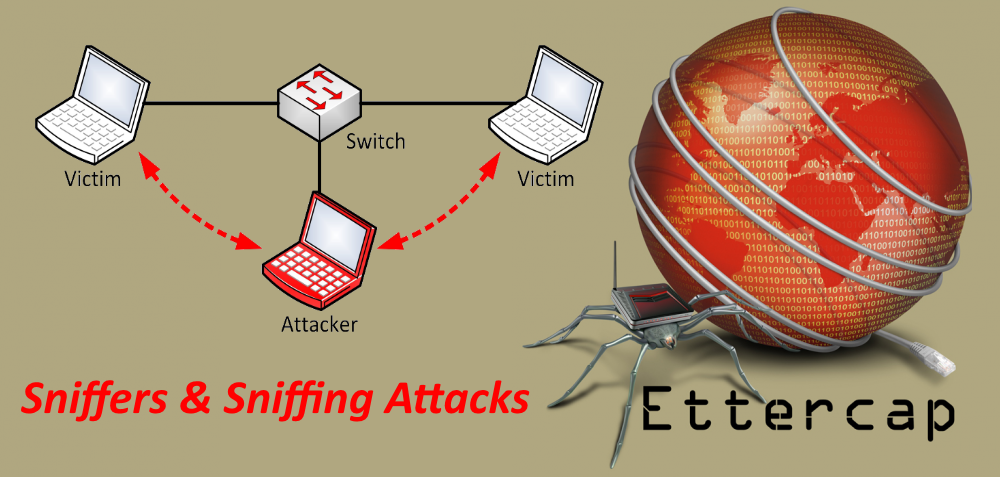
Sniffers & Sniffing Attacks

software development companies in india

A sniffer is an application that captures network packets. Sniffers are known as network protocol analyzers. While protocol analyzers are actually network troubleshooting tools used by software development companies in india, they are also used by hackers for hacking network. If the network packets are not encoded, the data inside the network packet can be recited using a sniffer. Sniffing refers to the process used by attackers to capture network traffic by a sniffer. Once the packet is seized using a sniffer, the contents of packets can be examined. Sniffers are used by hackers to capture delicate network information, such as account information, passwords etc.

Different types of attacks are as following:

1.1 A LAN sniff

A sniffer arranged on an internal LAN can scan the whole IP range lasciviously. This helps in providing more details such as live hosts, server inventory, open ports etc. Once a list of open ports is collected, a port-specific vulnerability attack is possible.

1.2 A protocol sniff

This technique involves sniffing data associated to the network protocols being used. First, a list of protocols is formed based on the captured data. This is further isolated to create special sniffers for each attack. For example, in a system sniff capture, if the ICMP protocol is not seen, it is expected to be blocked. However, if UDP packets are seen, a distinct UDP sniffer is started to capture and decipher Telnet, PPP, DNS and other connected application details.

1.3 An ARP sniff

In this popular method, the hacker captures a lot of data in order to create a map of IP addresses and the associated MAC addresses. Such a map is further used to create ARP poisoning attacks, packet-spoofing attacks, or to dig into router-based vulnerabilities.

1.4 TCP session stealing

This method is a simple form of sniffing, in which a network interface in licentious mode captures traffic between a source and a destination IP address. Details such asservice types,port numbers, TCP sequence numbers and the data itself are of interest to hackers. Upon capturing packets, advanced hackers can create fictitious TCP sessions to fool the source and destination, and be the man in the middle to take over the TCP session.

1.5 Application-level sniffing

From the data packets sniffed and captured, a few complicated application details are found out for information burglary or to create further attacks. As an example, the capture file can be analyzed to perform SQL query analysis, OS fingerprinting, reveal application-specific TCP port data information, etc. In alternative approach, generating a mere list of applications running on a server is decent enough to plan an application-specific attack on it.

1.6 Web password sniffing

As the name suggests, HTTP sessions are stolen and analyzed for user ID and password stealing. While the Secure Socket Layers (SSL) are combined for securing HTTP sessions on the network, there are many internal websites that still use standard but less protected encryption. It is easy to capture Base64 or Base128 packets and run a deciphering agent in contrast to crack the password. In modern sniffers, SSL sessions can also be captured and analyzed for information, though this method is not very simple.
1.7 Detecting sniffers

As mentioned earlier, since sniffers work mutely, it is very difficult to perceive them on a network. There are few tricks that can provide a clue to a likelysniffer presence. There are two ways to detect a sniffer, network-basedand host-based.In host-based detection, you can use small services to detect if the NIC is running in a licentious mode on any host in a network. Since the elementary requirement for a sniffer to work is to put the network interface in “read all” mode, restrictingit can very effectively help shutting down stray sniffers.In case of network-based discovery, anti-sniffer software can be run to sense the presence of specific signature packets. In alternative approach, scripts can be run to check each network host for the occurrence of known processes, sniffers etc. Modernanti-spyware or anti-virus software are proficient of detecting sniffing software and disabling it.

Monday, 30 May 2016

IT Outsourcing Risk Factors

IT outsourcing companies in India

IT outsourcing is purchasing from the outside vendor or the use of external service providers to effectively deliver IT-enabled business process, various application and IT service solution for business outcomes. IT outsourcing companies in India should improvise their service delivery in a way that it minimizes the risks to vendors.

Due to increased regulatory scrutiny and relationship of the companies with their service providers and the variety of external service providers, the decision to outsource has become more complicated and risky. This regulatory can be in terms of size, scope, and geographical location.

There are various benefits of the outsourcing. IT software development companies outsource many projects, assets etc. for carrying out business activities. Along with the IT outsourcing benefits, there also exists risks and risk factors that leads to many positive or negative outcomes.

The various risks factors associated with the outsourcing and their implications for global outsourcing are described as follows:

1) IT Outsourcing Risk factor - People
Implications for the Global Outsourcing : Globally distributed teams with different skills and experience contribute to risk

2) IT Outsourcing Risk factor – Knowledge (Functional, Technological, Managerial)
Implications for the Global Outsourcing : The extent of functional, technological, and managerial knowledge contributes to risk in offshore outsourcing. Managerial knowledge is extremely important in a global context.

3) IT Outsourcing Risk factor - Cultural
Implications for the Global Outsourcing : Country specific cultures can add risk in global outsourcing. Language and work ethics vary from country to country and that may contribute to risk.

4) IT Outsourcing Risk factor - Political
Implications for the Global Outsourcing : The major concern for global outsourcing Political instability is as the government rules and regulations may have adverse effect on outsourcing.

5) IT Outsourcing Risk factor - Financial
Implications for the Global Outsourcing : The financial aspect looks into Accounting standards and variation in currency exchange rate that contribute to risk.

6) IT Outsourcing Risk factor - Quality Standards
Implications for the Global Outsourcing : Quality standards vary from one country to another and contribute to risk.

7) IT Outsourcing Risk factor - Measurement
Implications for the Global Outsourcing : Performance measurement standards vary from country to country which contributes to risk.

8) IT Outsourcing Risk factor - Scope, Cost, and Time Estimates
Implications for the Global Outsourcing : It is quite difficult to accurately determine scope, cost, and time estimates in global outsourcing. This contributes to risk.

9) IT Outsourcing Risk factor – Company Specific Risks
Implications for the Global Outsourcing : Different companies in foreign countries have different management and core competencies. Those contribute to risk.

10) IT Outsourcing Risk factor - Legal Contracts and Intellectual Property
Implications for the Global Outsourcing : IP standards and law vary from one country to another and contribute to risk.

11) IT Outsourcing Risk factor - Security
Implications for the Global Outsourcing : Security is also a major concern in global outsourcing as protection and control of data pose a problem.

12) IT Outsourcing Risk factor – Disaster Recovery
Implications for the Global Outsourcing : Loss of control over disaster recovery contribute to risk.

13) IT Outsourcing Risk factor – Contract Management
Implications for the Global Outsourcing : Contract management in global outsourcing is a risky business as monitoring the project activities become a challenge.

14) IT Outsourcing Risk factor - Relationships & Alliances
Implications for the Global Outsourcing : Inability to manage relationships and alliances constitutes the risk in global outsourcing.

15) IT Outsourcing Risk factor – Geographic Location
Implications for the Global Outsourcing : Vendor’s geographic location comprises of various risks. Communication infrastructure failure in offshore projects incurs significant loss.

16) IT Outsourcing Risk factor - Multi-vendor Arrangements
Implications for the Global Outsourcing : In global outsourcing with multivendor arrangements, coordination has to be effective and efficient. Otherwise execution becomes a problem and contributes to risk.

Conclusion: Thus, the IT outsourcing companies should think strategically about the risks factors for outsourcing different functions or the segments. The companies should consider different aspects while outsourcing like what needs to be outsourced, what amount of the data should be provided for outsourcing to the supplier. This will eventually lead to risk mitigation.

Monday, 25 April 2016

Mobile OS Architecture Trends

custom software development companies

The design of Mobile OS has experienced a three-phase evolution in the past decade: from the PC-based operating system to an embedded operating system to the current smart phone-oriented operating system. The Mobile OS architecture has gone from simple to complex to something in-between, while this entire evolution process. This evolution process is driven naturally by the technology advancements in the internet, as well as in software and hardware because of the advancement in the custom software development companies.

The technological advancements by web development companies have resulted in a variety of different competing mobile operating system solutions on the market driven by different actors. Few of these actors include Bada by Samsung, iOS of Apple, Android by Google, RIM’s BlackBerry OS, Symbian of Nokia, Windows Phone by Microsoft, webOS by HP and few embedded Linux distributions such as MeeGo and Maemo to mention few of them.

Some of the most popular mobile operating systems are described below:

Android OS

As of 2011, Android has the largest installed base of any mobile OS and its devices also sell more than Windows, iOS and Mac OS devices combined as of 2013 (Mahapatra, 2013). As of July 2013 the Google Play store has had over 1 million Android apps published, and over 50 billion apps downloaded (PHONEARENA, 2014). One of the developer survey conducted between April and May 2013 found that 71% of mobile developers develop for Android (DEVECO, 2013).

The layers of Android platform are as follows :
  • Linux Kernel: Android relies on Linux for core system services such as process management, security, memory management, and many more.
  • Android Runtime: it provides a set of core libraries which supports most of the functionality in the core Java libraries. Android Virtual Machine known as Dalvik VM relies on the Linux kernel for some underlying functionality.
  • Libraries: Android includes a set of C/C++ libraries which are exposed to developers through the Android application framework including surface manager, media libraries, system C libraries, 3D libraries etc.
  • Application Framework: it provides an access layer to the framework APIs used by the core applications and allows components to be used by the developers
iOS
  • iOS(previously iPhone OS) is a mobile operating system developed by Apple Inc. and  is exclusively distributed for Apple hardware. iOS is the operating system that powers iPod Touch, iPad, Apple TV and iPhone. It promoted a new style of user interaction for limited input devices, small screen, specifically, direct manipulation. On-screen interface elements, and to perform interface operations are controlled by touch-based gestures like tap and hold, tap, swipe, and pinch. iOS is derived from Mac OS X.

iOS is made up of following  abstraction layers:
  • Core OS: The kernel of the operating system including basic low-level features: system support—DNS, threads, math, sockets, memory—general security services— private/public keys, certificates, encryption— Bluetooth, sound and image processing, and external hardware management.
  • Core Services: Fundamental system-services, which are subdivided in different frameworks and based on C and Objective C. IT include basic application services including SQLite, calendar events, XML support, accounts, location data management, contacts, networking,  and store purchasing. 
  • Media Layer: Considers the high-level frameworks that are responsible for using graphics both 2d and 3d, video- and audio technologies.
  • Cocoa Touch: The UIKIT, which is an Objective- C based framework and provides a number of functionalities that are necessary for the development of an iOS Application like the User Interface Management. Also APIs for building applications— multitasking, notifications, interface views, access to device data and touch input are included. 

Windows Phone

Windows Phone is a proprietary smart phone operating system developed by Microsoft. It is the successor to Windows Mobile, though it is incompatible with the earlier platform. Windows Phone was launched in 2010 under the name Windows Phone 7. Large number of hardware manufacturers including HTC, Samsung, LG, and Nokia are developing Windows Phone devices. Both Nokia and Microsoft announced in February 2011 that Windows Phone 7 would be the primary OS for all future Nokia smart phones. Windows Phone 7 received a major upgrade (7.5 Mango) in February 2011, adding features that had been missing in the original release. The Second generation Windows Phone 8 was released in October 2012 (NCSU, 2014).

Windows Phone 7’s architecture required a hardware layer that meets Microsoft’s minimum system requirements: a multi-touch capacitive display, 256MB RAM, a DirectX 9-capable GPU, an accelerometer, 8GB of flash memory, a compass, a 5-megapixel camera, proximity and light sensors, an A-GPS, an ARM7 CPU and six physical buttons: back, start, and search; camera, volume, and power/sleep(Windows, 2011). Windows Phone kernel handles low-level device driver access as well as basic storage, security and networking.Three libraries: a UI model for user-interface management, an App Model for application management, and a Cloud Integration module for web search via push notifications, location services ,Bing, and so on sit above the kernel (NCSU, 2014). The application-facing APIs include XNA, Silverlight, HTML/JavaScript and the Common Language Runtime (CLR) that supports C# or VB .Net applications. Kernel itself is a proprietary Windows OS design for embedded devices that combines Windows Embedded CE 6.0 R3 and Windows Embedded Compact 77. Windows Phone 8 replaced the Windows CE kernel with one based on Windows NT and this is meant in part to mimic the Windows 8 desktop OS, which allows for easier porting of applications between the two operating systems, usually carried out in many application development companies.

Author Signature - Sanika Taori

Sunday, 24 April 2016

Marketing a Custom Software

Custom Software Development company

Custom software is specially developed for some specific Custom Software Development company or other user with specific needs. As such, it can be contrasted with the use of software packages developed for the mass market, such as commercial off-the-shelf (COTS) software, or existing free software.

Custom software development is often considered expensive compared to off-the-shelf solutions or products. This can be true if one is speaking of typical challenges and typical solutions. However, it is not always true; custom software development by a reputable supplier is often a matter of building a house upon a solid foundation and, if managed properly, it is possible to do this quickly and to a high standard. In many cases, COTS software requires customization to correctly support the buyer's operations. The cost and delay of COTS customization frequently adds up to the expense of developing custom software.

Business processes are an important intellectual property for any software development organization. Fine-tuning and enforcing your processes through smart, fully-automated applications can help set your company apart from your competitors. Most custom software companies in India don't market their product correctly. Marketing should focus not on products but on customers. If marketing were supposed to focus the product, it would be called “producting.”But it's not is it? It's called “marketing,” which means that marketing is supposed to focus on the marketplace—and the marketplace is made up of people: customers and prospects. This focus on marketplace instead of product must form the basis of your strategic and tactical marketing—when you lose this focus your marketing loses its meaning. Start off by segmenting your market.

There are some option for creating marketing strategies. Try company size and industry sector as variables. i.e. you are looking for medium sized companies in the financial services sector. The company size and industry sector would be dependent on the previous experience of your team. Speaking of that, have you got case studies on your previous engagements? Client testimonials are also good. Your revenue comes from services. Your revenue does not come from custom software development in isolation. Position yourself to as a services firm that provides solution. Your solutions should solve business problems. What problems do your solutions solve? What problems do your clients/prospects have? Do you provide customization of 'boxed product'? Do you improve system performance or functionality? Do your solutions provide benefit to the technical side or the end-user side? What does your service methodology provide that other service providers don't? Who benefits the most from your solutions and how? The answer to these questions will build your value proposition and create a compelling story that clients will want to hear!

Identify your niche by analysing your past project successes. And ask some questions to yourself. like:
  • What technologies were used?
  • What business department did you serve?
  • What business process or function did you improve?
  • Did you save your client money?
  • Did you improve a process?
  • What industry did you serve?

Break these criteria down into a basis and you will start to see where your company has been successful - then you can begin to replicate that success.

According to those criteria plan strategy for marketing your custom software.

Some common marketing methods are as follows :
  • Continuous Search Engine Optimization
  • Affiliates marketing
  • Write newsletters and press releases
  • Get involved in online forums and blogs

Thus, the custom software development companies in India should use these strategies and points while marketing the custom software.